About the lab

Computational methods for capable, interpretable intelligence.

The Laboratory for Computational Vision and Intelligence, or CVI Lab, is a research group at the University of British Columbia’s Okanagan campus led by Dr. Shan Du. Established in 2020, the lab investigates computational methods that enable intelligent systems to perceive, model, generate, and reason about complex visual and multimodal information.

Laboratory overview

Connecting foundational research with real-world questions

Our work brings together computer vision, computer graphics, image and video processing, machine learning, deep learning, pattern recognition, and signal analysis. Current research includes generative models for three-dimensional faces, human motion, and scenes; multimodal methods for remote sensing and environmental monitoring; intelligent analysis of visual and acoustic signals; and trustworthy and explainable artificial intelligence.

By combining foundational research with application-driven development, the lab seeks to create intelligent systems that are technically capable, interpretable, reliable, and useful in real-world environments.

01

Mission

Rigorous research with meaningful impact

Our mission is to advance computational vision and artificial intelligence through innovative, rigorous, and application-oriented research. We develop intelligent systems that can generate and understand complex visual and multimodal data while remaining reliable, interpretable, and responsive to real-world needs. Through interdisciplinary collaboration and student mentorship, we aim to translate foundational research into technologies with meaningful scientific and societal impact.

02

Vision

Intelligence worthy of human trust

We envision a future in which artificial-intelligence systems can perceive, model, and interact with complex environments in ways that are both highly capable and worthy of human trust. CVI Lab aims to contribute to this future by unifying generative modelling, multimodal perception, and responsible AI, enabling intelligent technologies that are adaptable, understandable, and beneficial across scientific, industrial, environmental, and societal applications.

Research themes

Three Areas, One Connected Agenda

Our work moves between generative modelling, multimodal sensing, and responsible deployment.

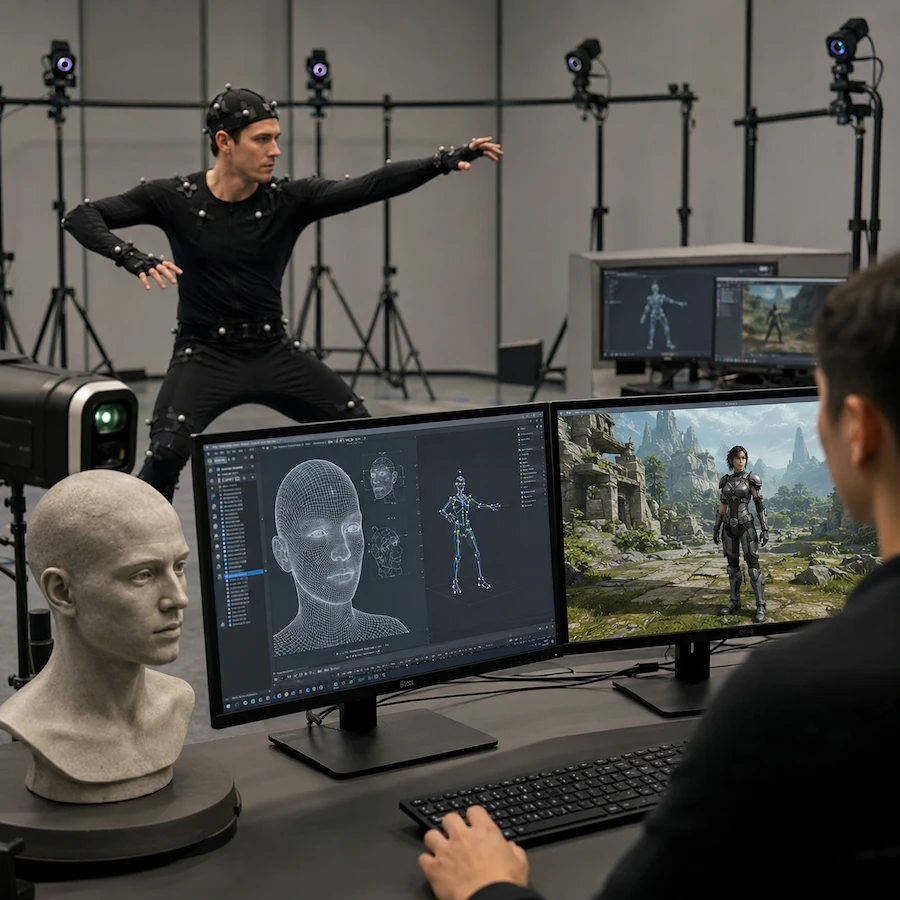
A motion-capture studio with a performer, tracking cameras, a 3D face model, and a generated digital character on workstations.

Generative 3D Vision and Graphics

Our research in generative 3D vision and graphics investigates computational methods for modelling complex visual structures and dynamic environments. Current topics include neural representations, 3D head avatars, controllable human motion generation, scene generation, reconstruction, rendering, and related applications in computer graphics and computer vision.

3D face and head-avatar generationHuman motion generation3D scene generationNeural rendering3D Gaussian representationsControllable generative modelsVisual reconstruction
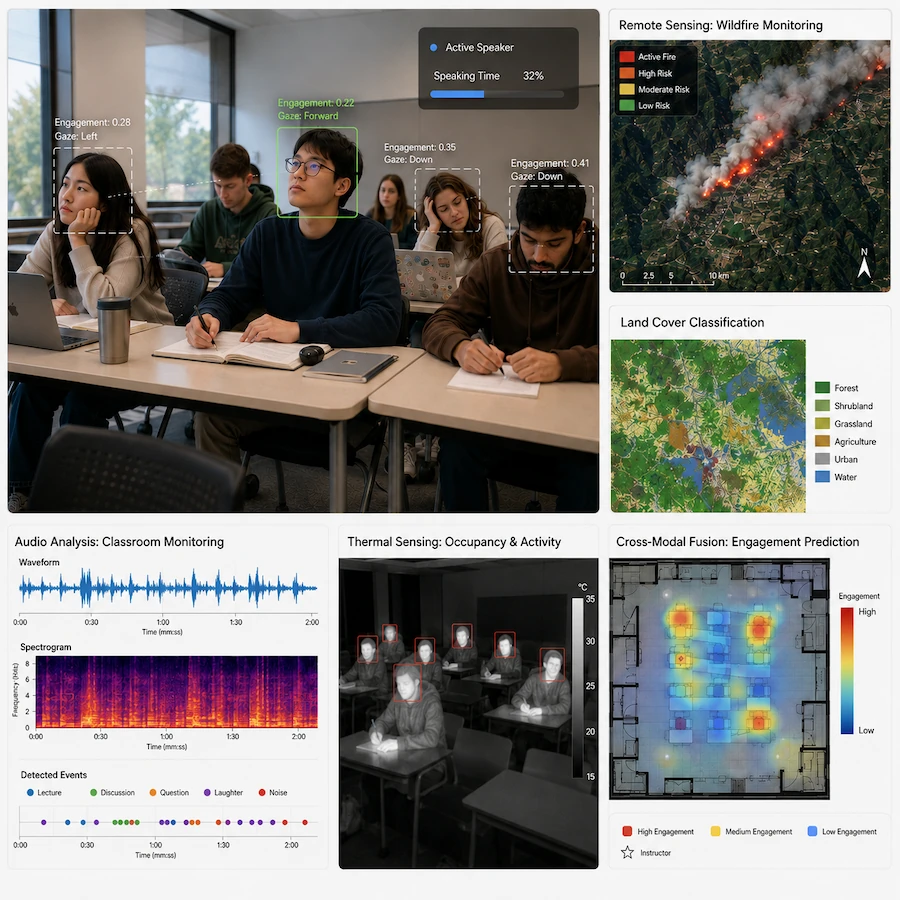
A multimodal analysis dashboard combining classroom vision, wildfire remote sensing, audio, thermal imagery, and an engagement heatmap.

Multimodal Perception and Intelligent Sensing

Our research in multimodal perception and intelligent sensing develops deep-learning methods for extracting meaningful information from heterogeneous data sources. We study the joint understanding of visual, acoustic, spatial, and sensor observations, with applications including remote-sensing image analysis, environmental monitoring, anomaly detection, gas-leak detection, audio processing, and intelligent surveillance.

Remote-sensing image analysisImage and video understandingAudio and acoustic signal analysisGas-leak detectionEnvironmental monitoringMultisensor data fusionAnomaly and event detectionIntelligent surveillance
A rainy street scene annotated with object detections, confidence scores, an attention heatmap, and grounded scene checks.

Trustworthy and Explainable AI

Our research in trustworthy and explainable AI examines how learning-based systems make decisions, how their behaviour can be interpreted, and how their reliability can be improved. We are interested in explainability, robustness, uncertainty, safety, fairness, and responsible deployment across vision, sensing, and multimodal applications.

Explainable AIInterpretable machine learningAI safetyModel robustnessReliability and uncertaintyResponsible AIBias and fairnessEvaluation of high-stakes AI systems

How we work

Research Approach

Our research combines theoretical development, data-driven modelling, system implementation, and empirical evaluation. We study both foundational machine-learning problems and application-specific challenges, using insights from computer vision, computer graphics, image and signal processing, pattern recognition, and multimodal learning.

We place particular emphasis on methods that offer meaningful control, generalize to complex data, and can be evaluated beyond a single benchmark. Where appropriate, we collaborate across disciplines to connect computational innovation with practical sensing, analysis, and decision-making needs.

Application areas

Our research supports a broad range of applications involving visual, spatial, acoustic, and multimodal data. Potential application areas include digital humans and virtual environments, animation and content creation, remote sensing, environmental monitoring, industrial inspection, gas-leak detection, intelligent surveillance, audio-event analysis, anomaly detection, human-centred computing, and decision-support systems.

Digital humans3D avatarsAnimation and virtual environmentsRemote sensingEnvironmental monitoringIndustrial safetyGas-leak detectionIntelligent surveillanceAudio-event analysisMultimodal sensingAnomaly detectionResponsible AI
Illustrated portrait of Dr. Shan Du

Principal investigator

Dr. Shan Du

Assistant Professor, Computer Science · The University of British Columbia, Okanagan Campus

Dr. Shan Du received her PhD in Electrical and Computer Engineering from the University of British Columbia. She is an Assistant Professor of Computer Science at UBC’s Okanagan campus and leads the Laboratory for Computational Vision and Intelligence.

Before joining UBC, she was an Assistant Professor in the Department of Computer Science at Lakehead University and worked as a Research Scientist and Software Engineer at IntelliView Technologies Inc. She has more than 15 years of research and development experience spanning image and video processing, computer vision and graphics, pattern recognition, machine learning, biometrics, and intelligent surveillance systems.

Her research focuses on developing innovative technologies for challenging problems in computer vision, computer graphics, machine and deep learning, image and video processing, and multimodal intelligent systems. Her work combines foundational algorithm development with real-world applications in visual analysis, sensing, environmental monitoring, and related fields.